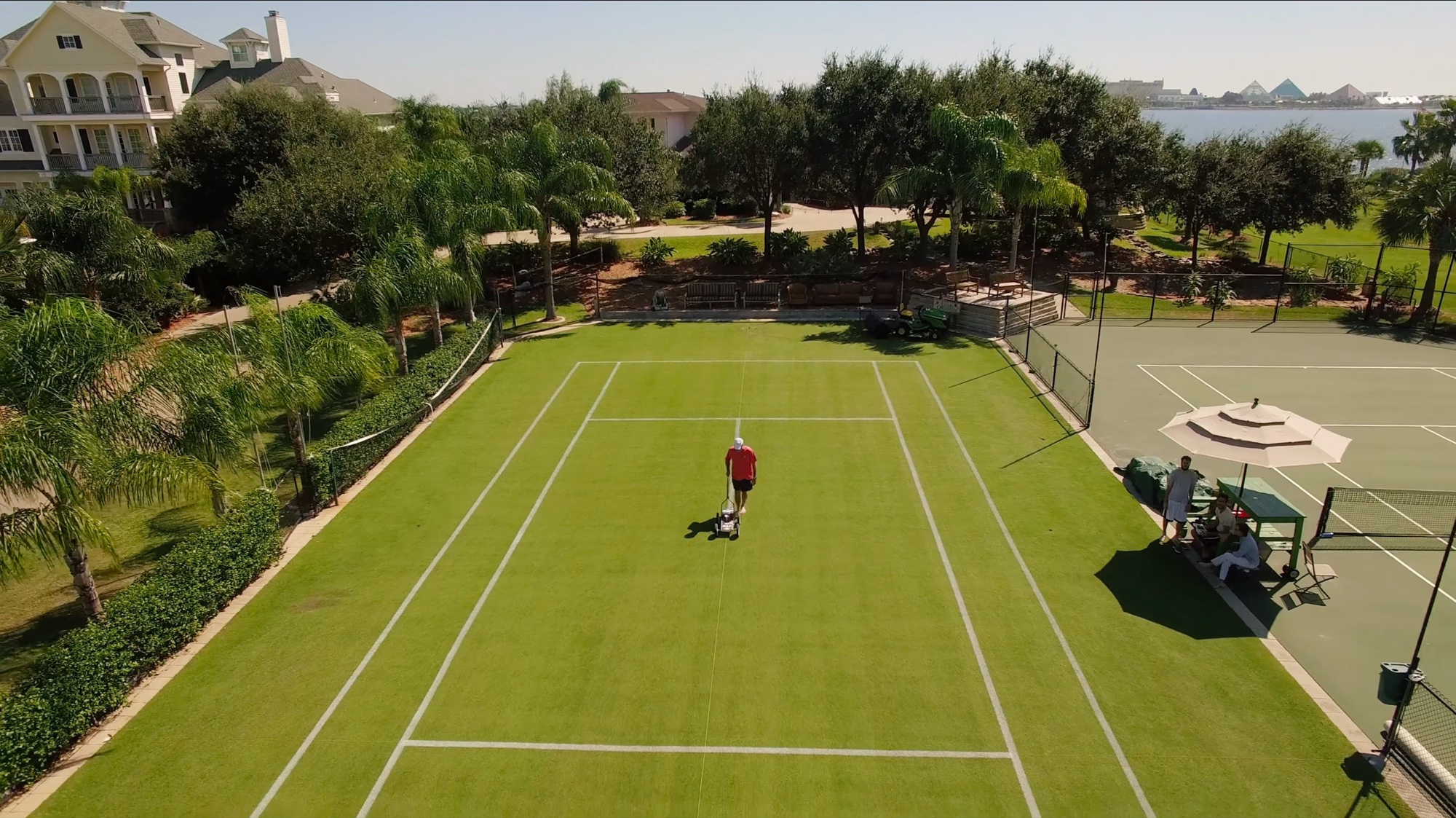
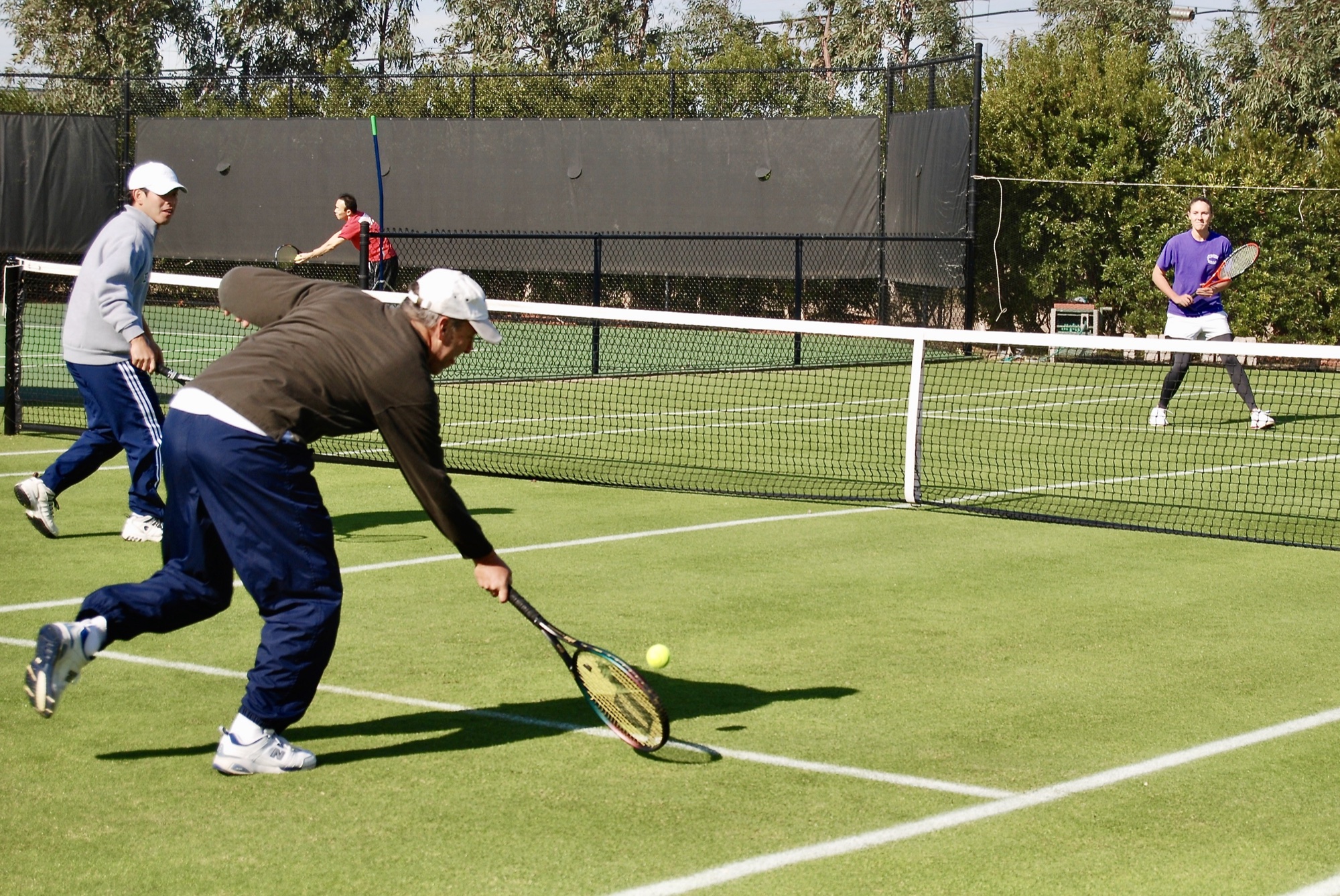
From the highway, you'd never guess what sits tucked behind the wall of foliage. Bamboo, Texas Sabal palms, and oleanders stand between the courts and the road, a living screen planted for privacy. Step past it and the air shifts: the salt of the gulf breeze blows from Offatts Bayou, brushing across two courts that anchor the front yard.
One is a lush patch of grass, temperamental and alive, demanding hours of mowing, rolling, dethatching, and top dressing, to say the least. The days of Dominick doing it all by himself are winding down, and Carlos now tends it as if it were his own, carrying on the tradition of keeping it play-ready for Sundays.
The other, a hard court painted in two tones of green, rests under unique lights angled just right to reduce light pollution, a design found only at the end of a ten-year search. Between them, a raised terrace, aptly named the royal box, gives a perfect vantage point, so no rally, no joke, no flash of temper goes unwitnessed.
The family mantra, "There is no family in tennis," first declared by Mary Von Tungeln, hovers over every point, half warning, half invitation to swing freely, even against your own blood. A sign at the back of the court adds the fine print: "There will be a $5 charge for whining."
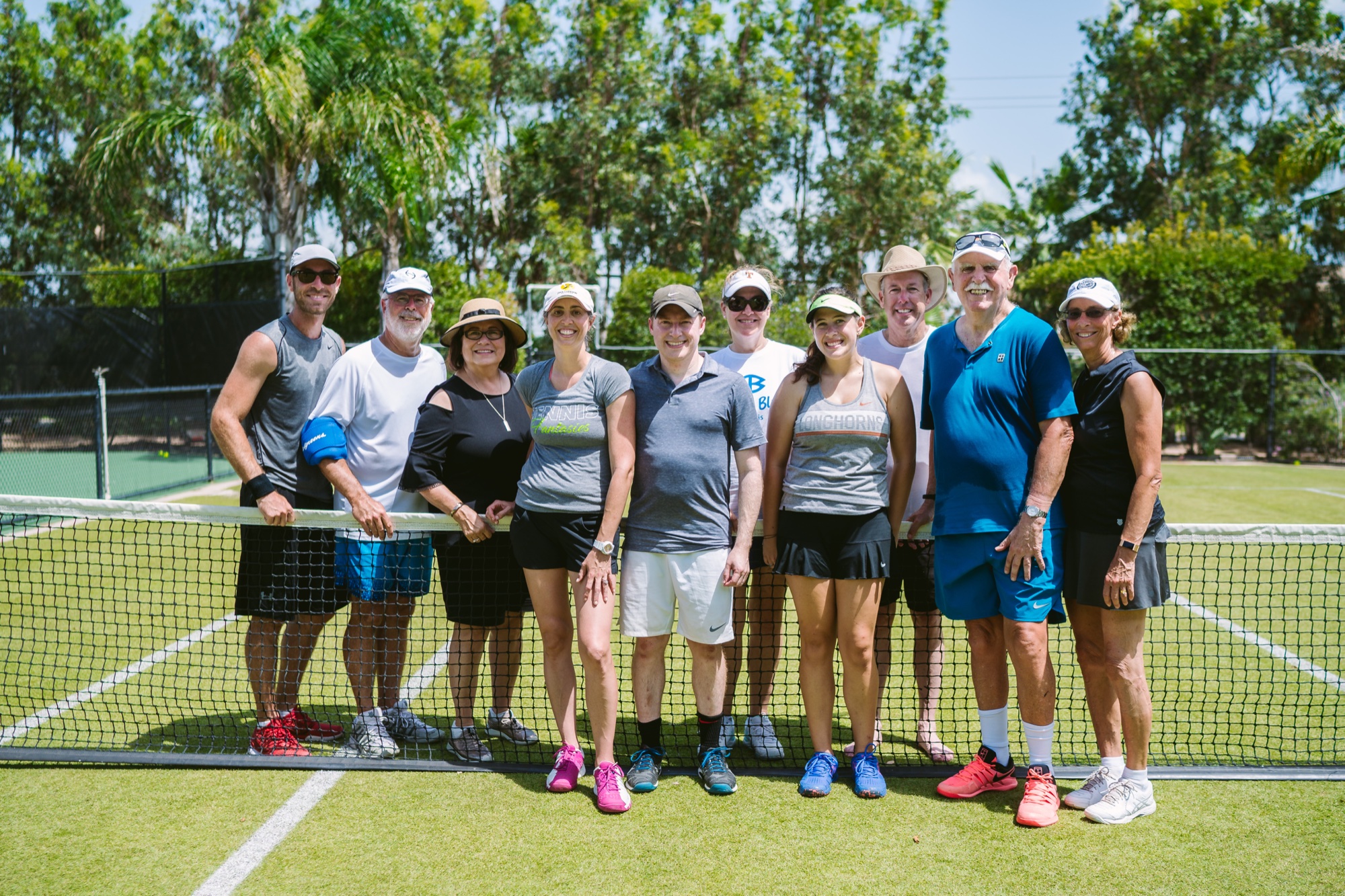
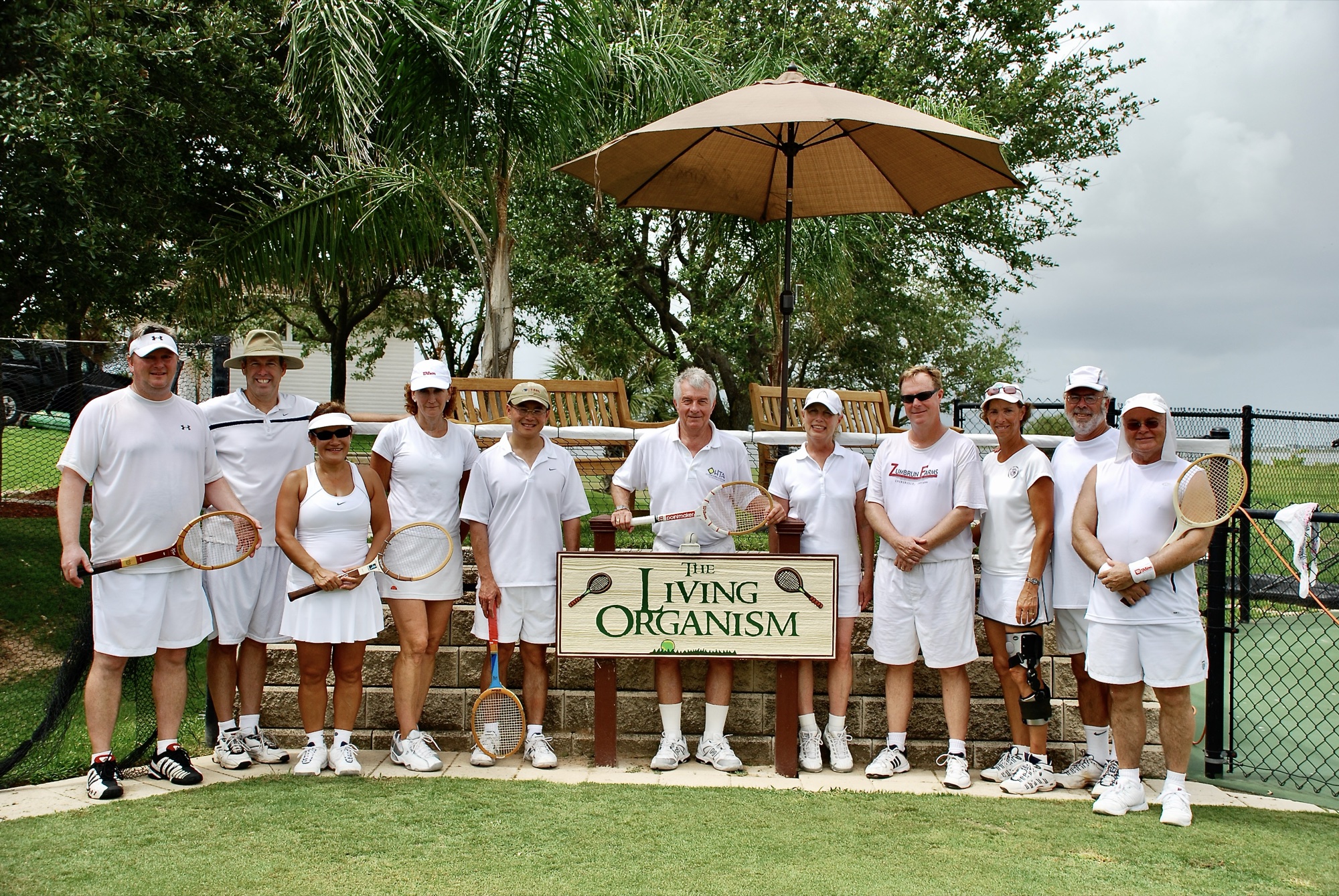
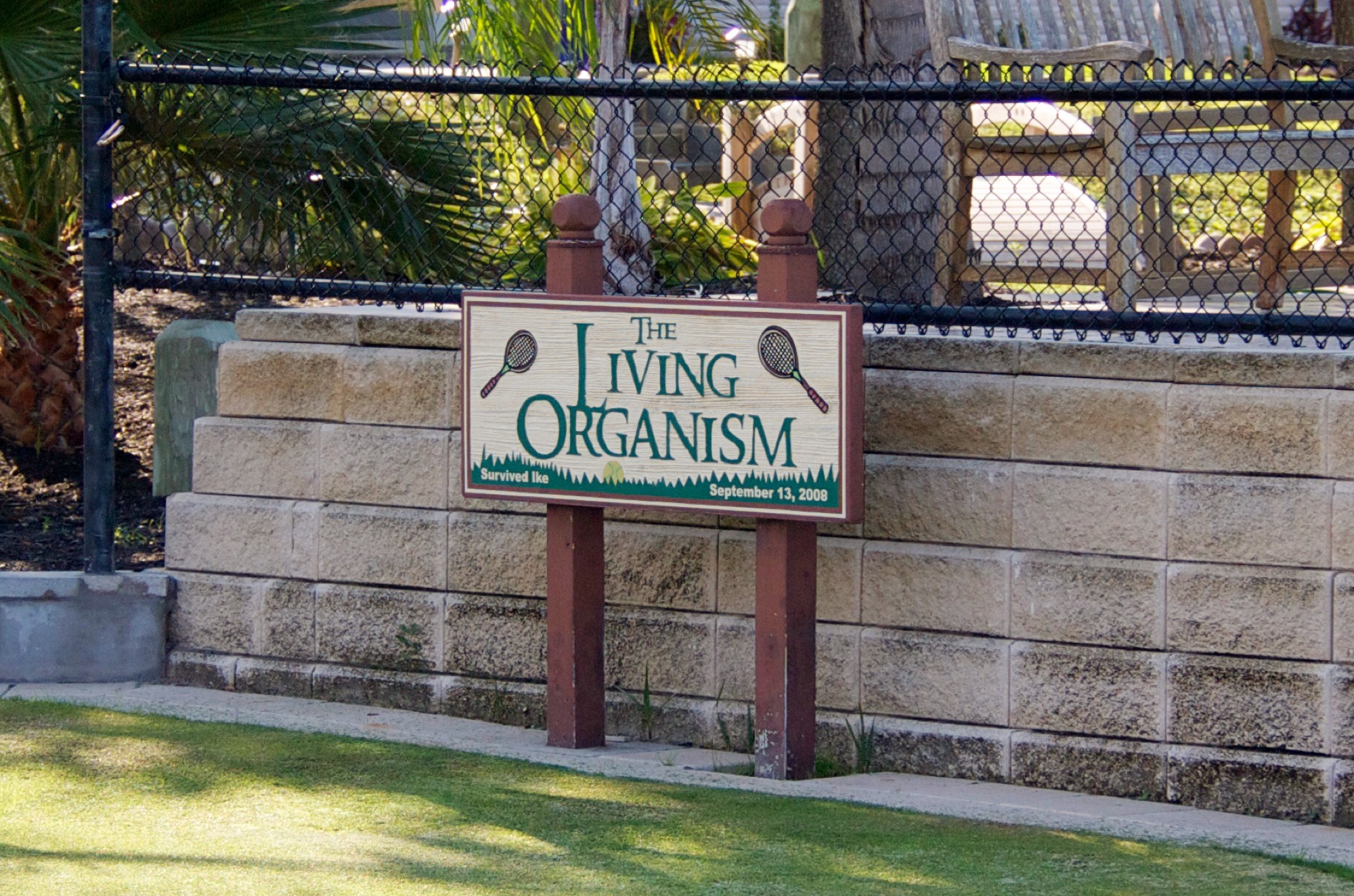
The courts are storied, stitched together with memories of Sunday morning doubles over the last 23 years where strangers and neighbors rotated through games until noon, and with lessons that ranged from a child's first forehand to a clinic run by Grand Slam champion Owen Davidson, winner of 13 Grand Slams. When Hurricane Ike surged through Galveston and flooded the yard, the grass court seemed doomed, but the water pressed it down, healed it, and left it stronger, a survival that earned it the nickname, coined by John Campbell "The Living Organism."
Today, both courts remain tended with the same care given to friendships forged here. Some come for a competitive set, others for the simple joy of hitting under the coastal sky, but everyone leaves with the same impression: this is more than a home, it is a sanctuary where tennis has been given life.
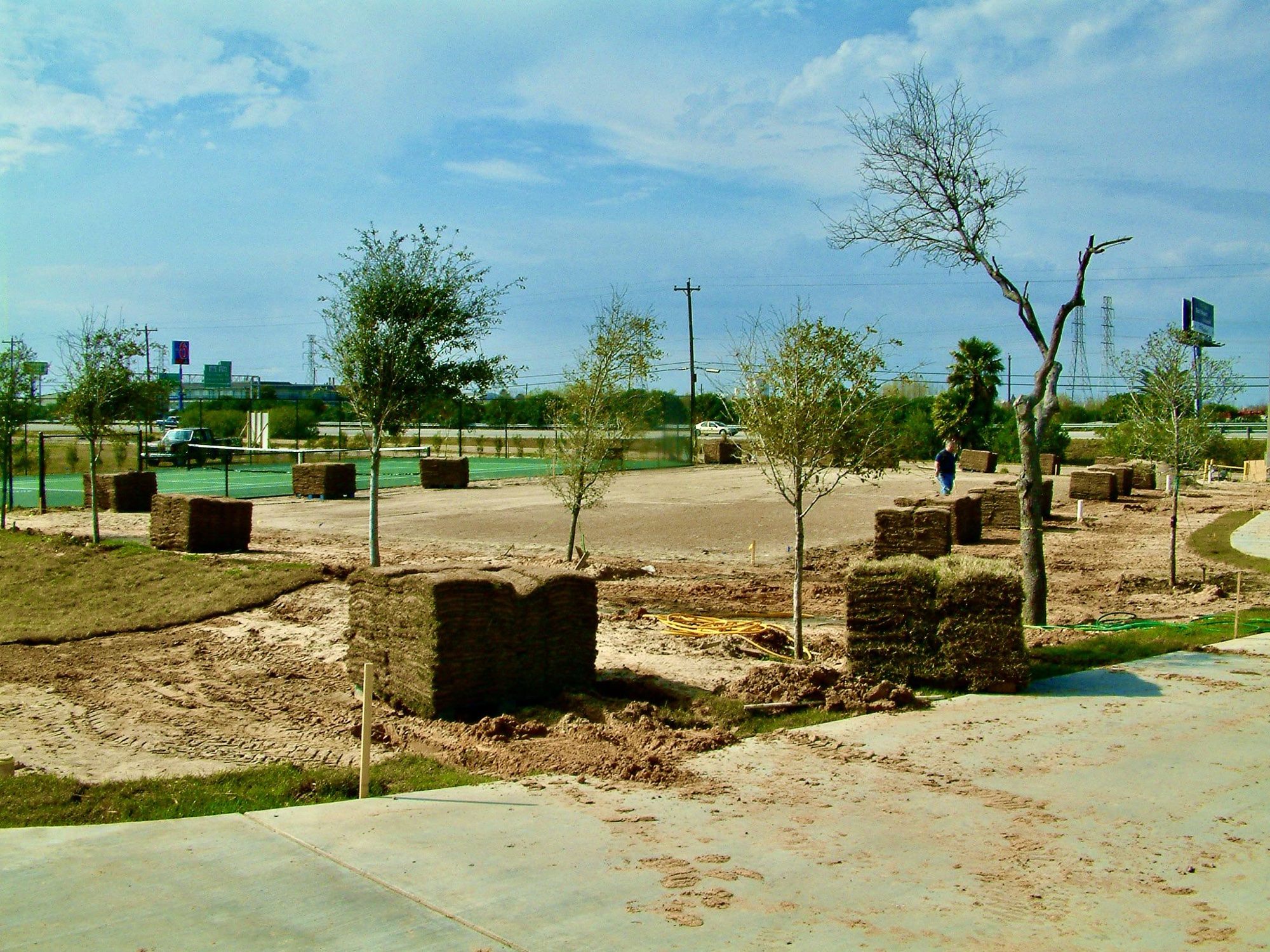
How It Started
February 19, 2003
The sod arrives, February 19th, 2003
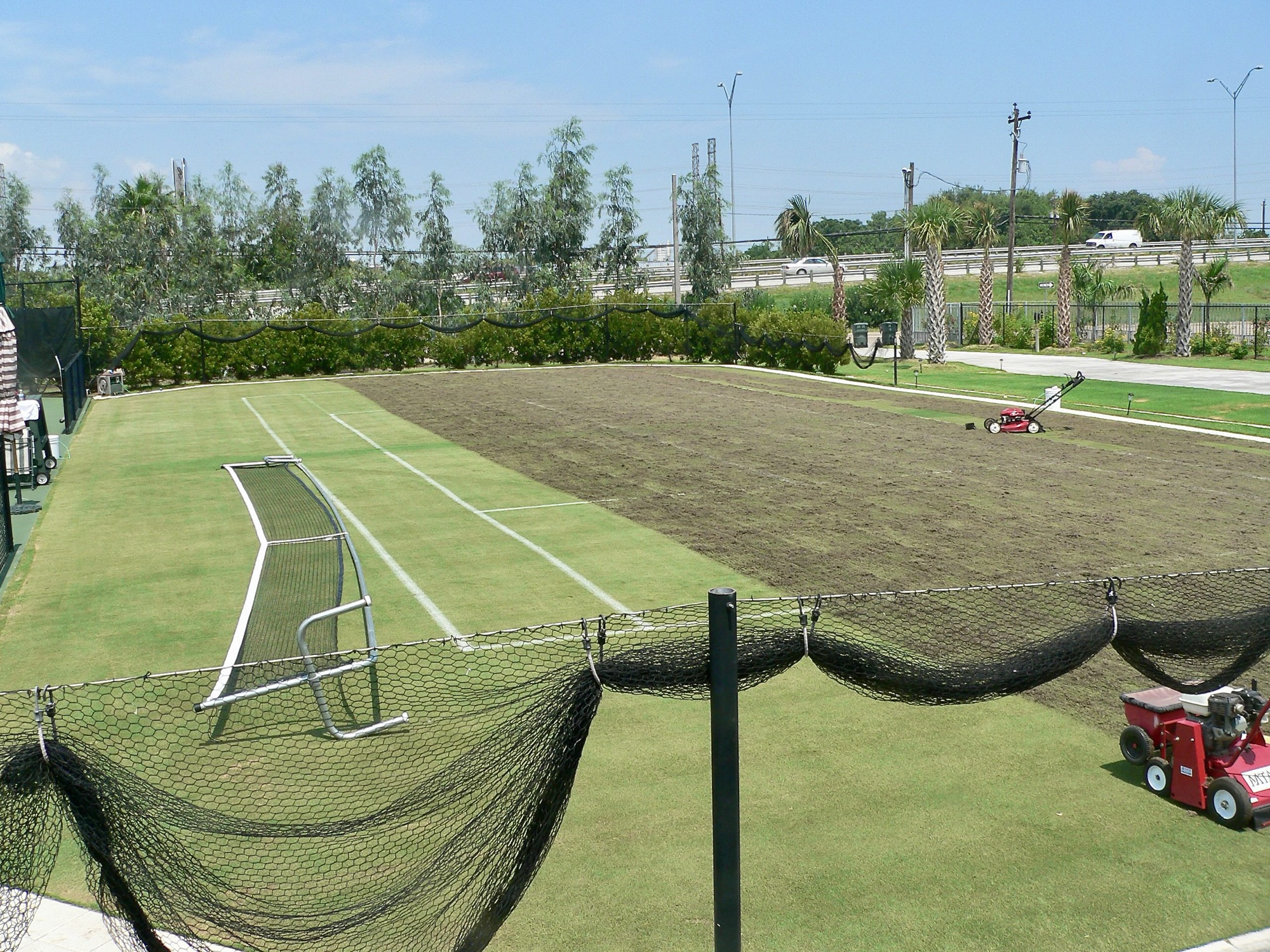
Annual dethatchingThe removal of the layer of dead grass and organic matter that accumulates between the soil and living blades, allowing water, air, and nutrients to reach the roots more freely.
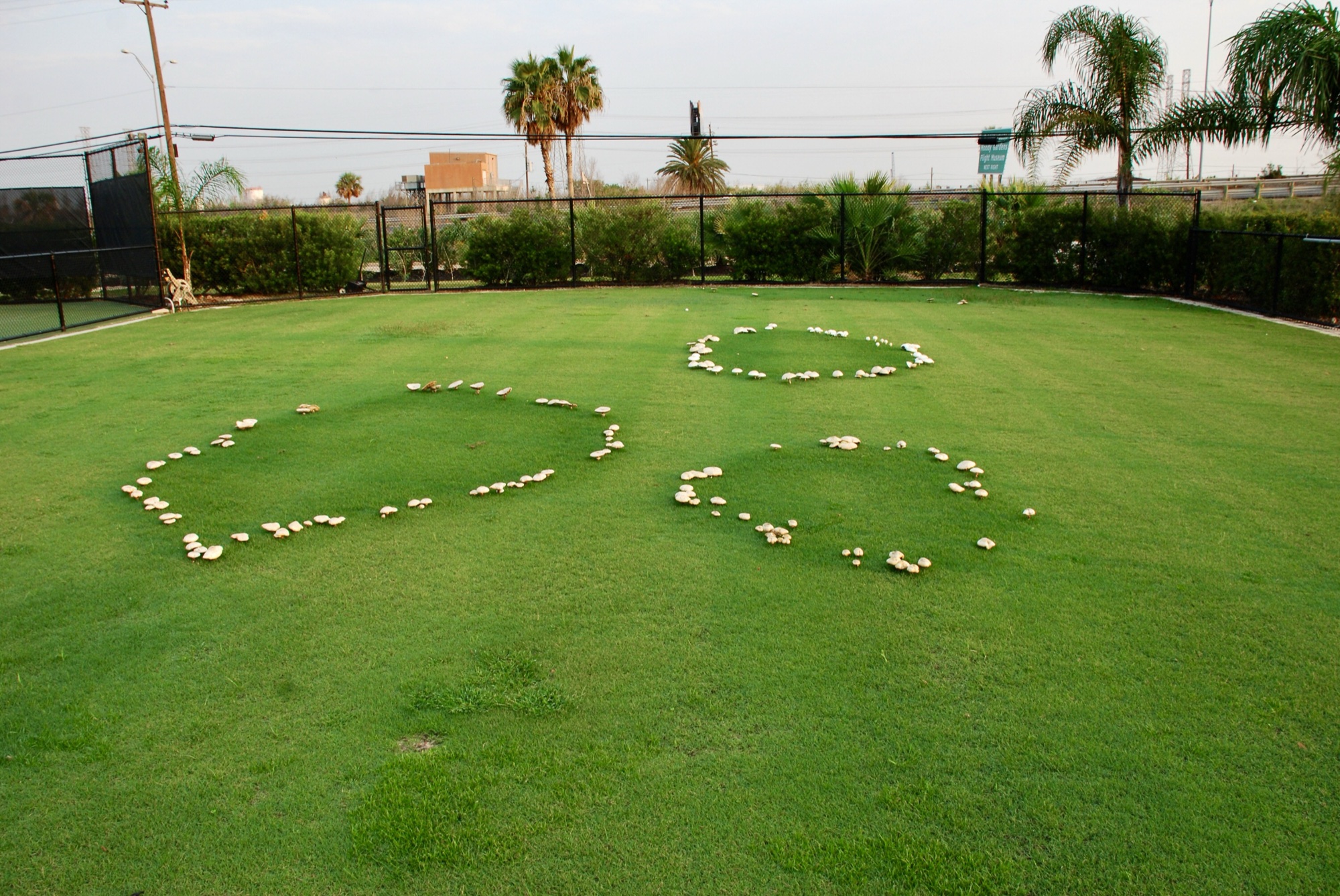
It is, after all, alive
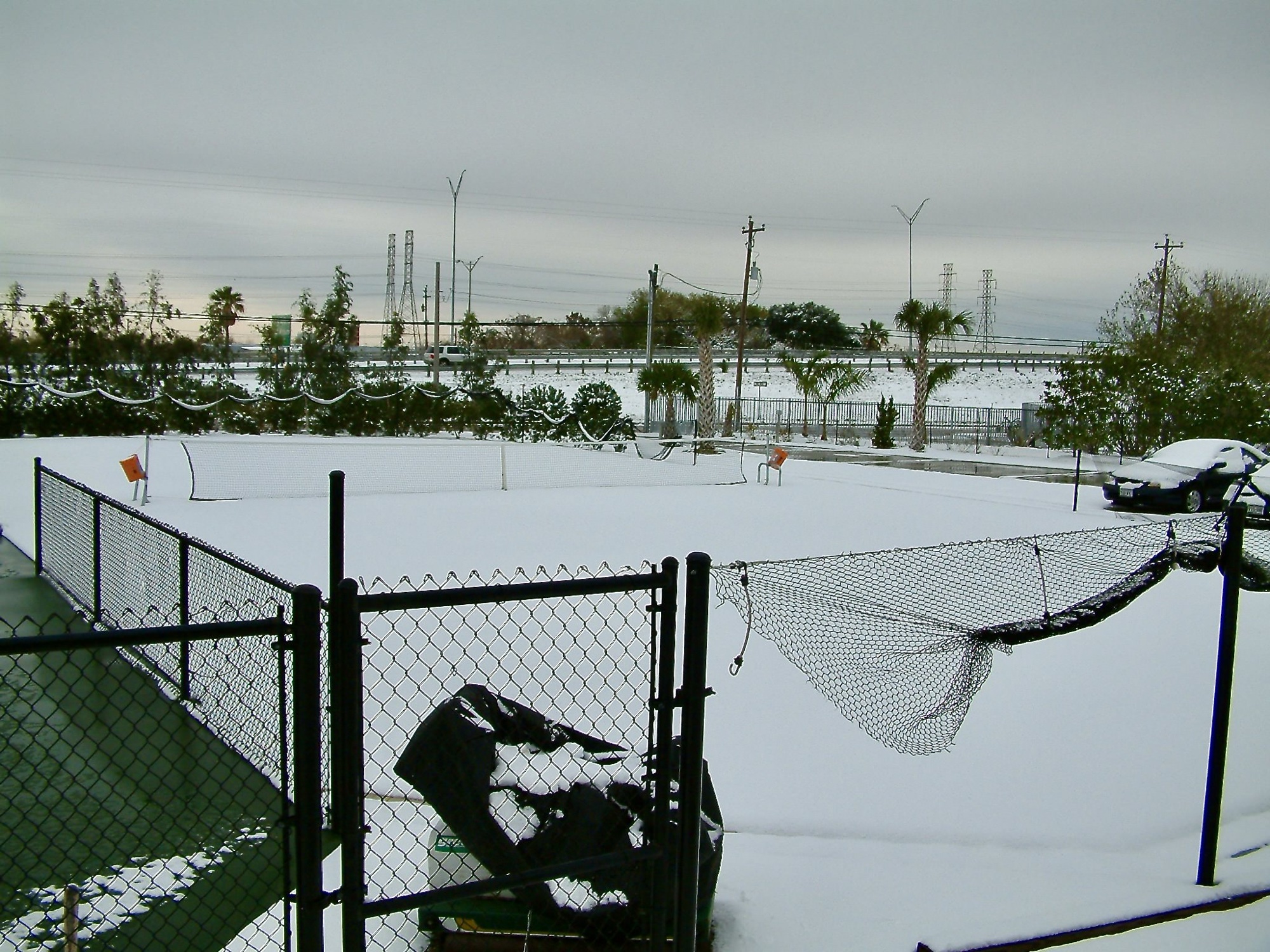
Play suspended due to snow
Painting the lines in windy Galveston
In Play
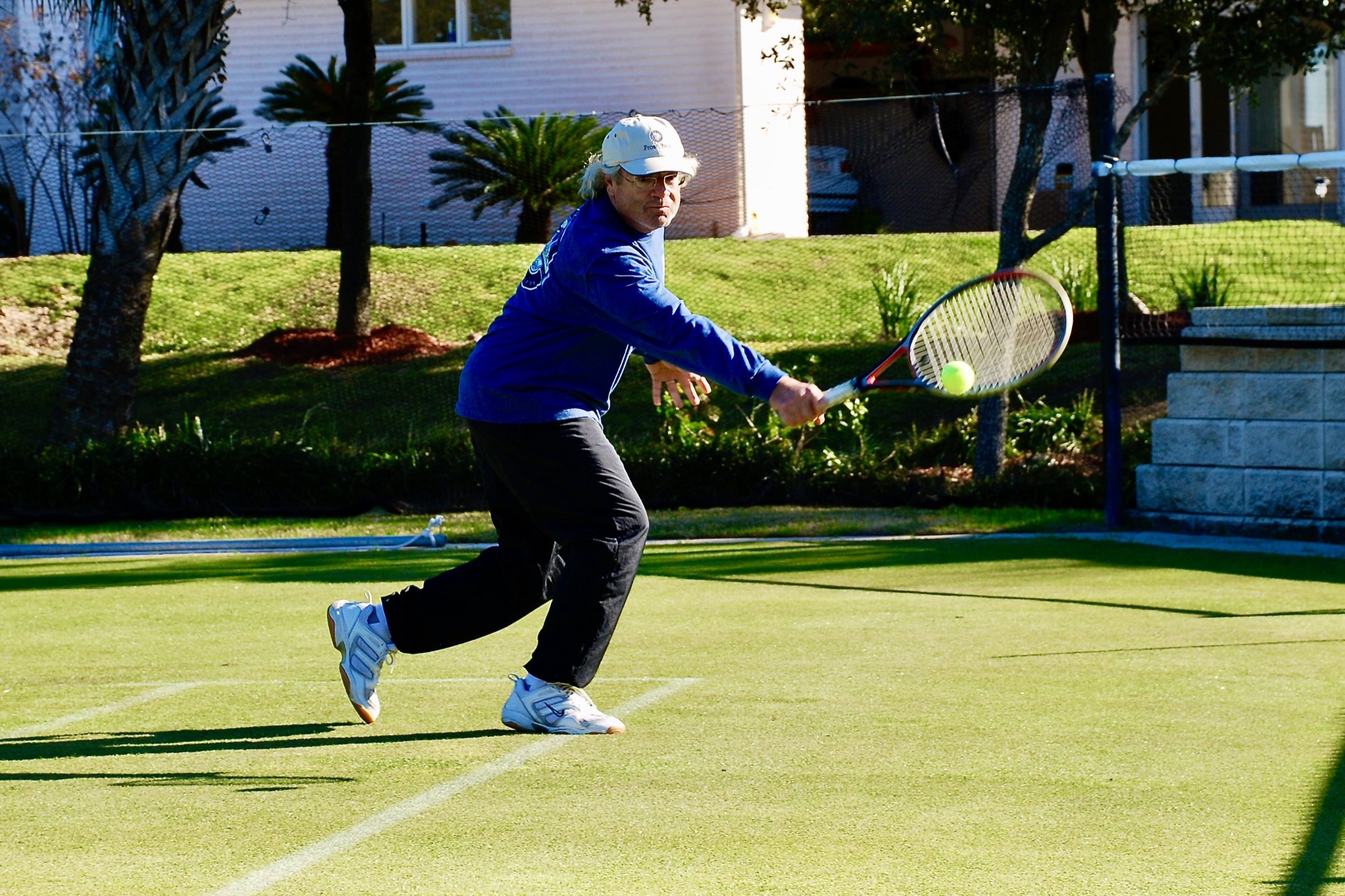
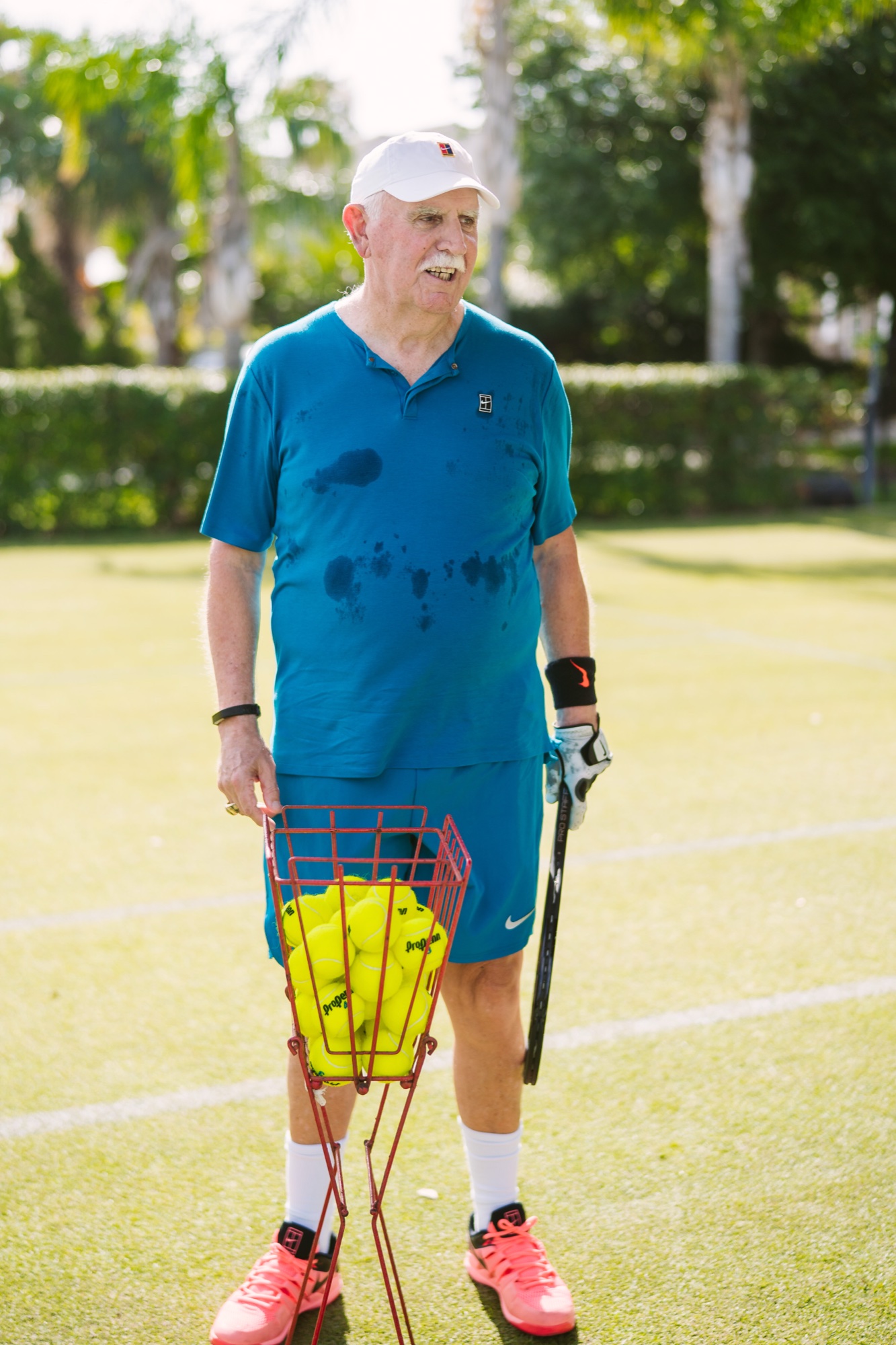
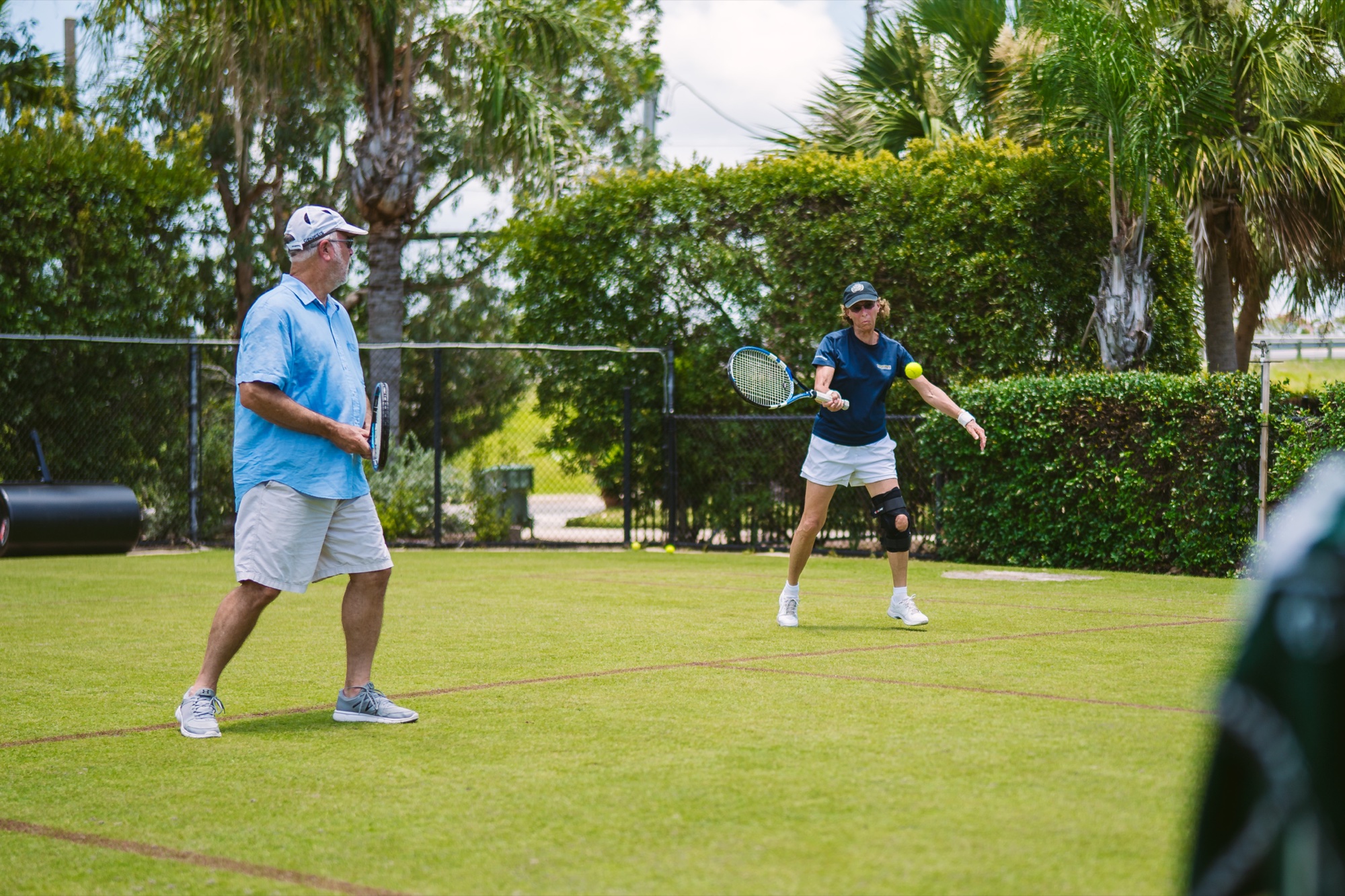
Sunday doubles until noon
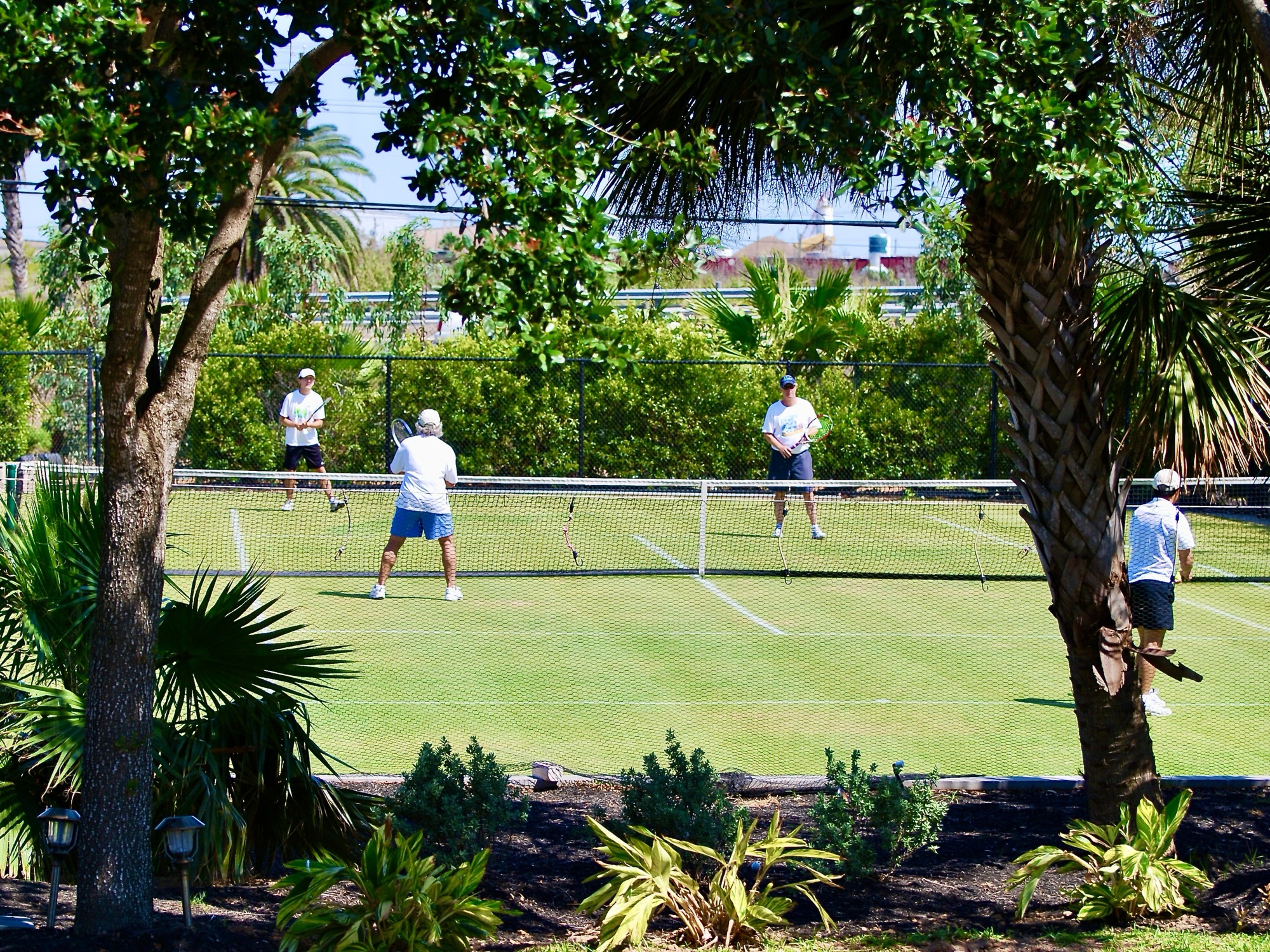
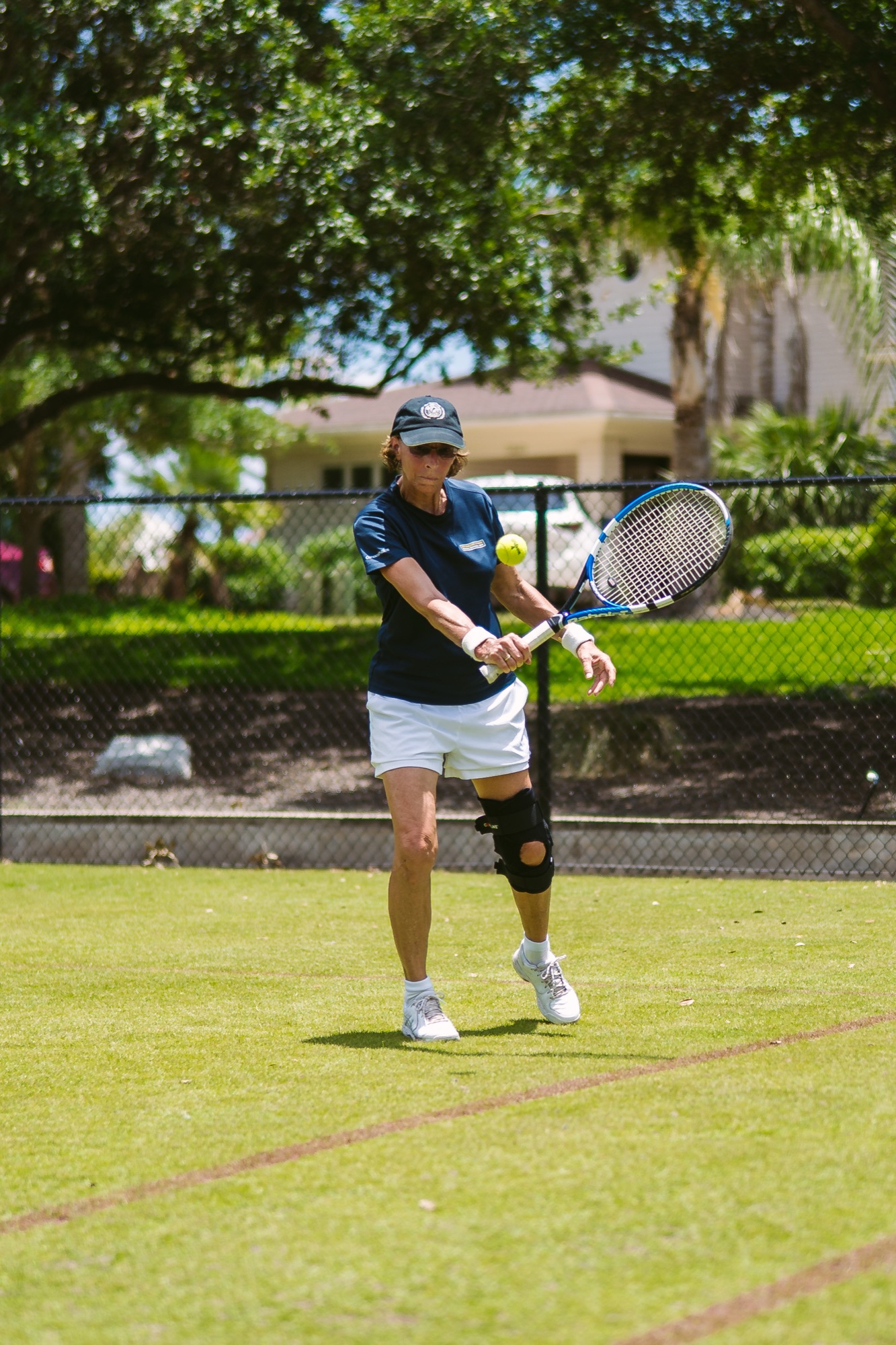
Seen through the oaks
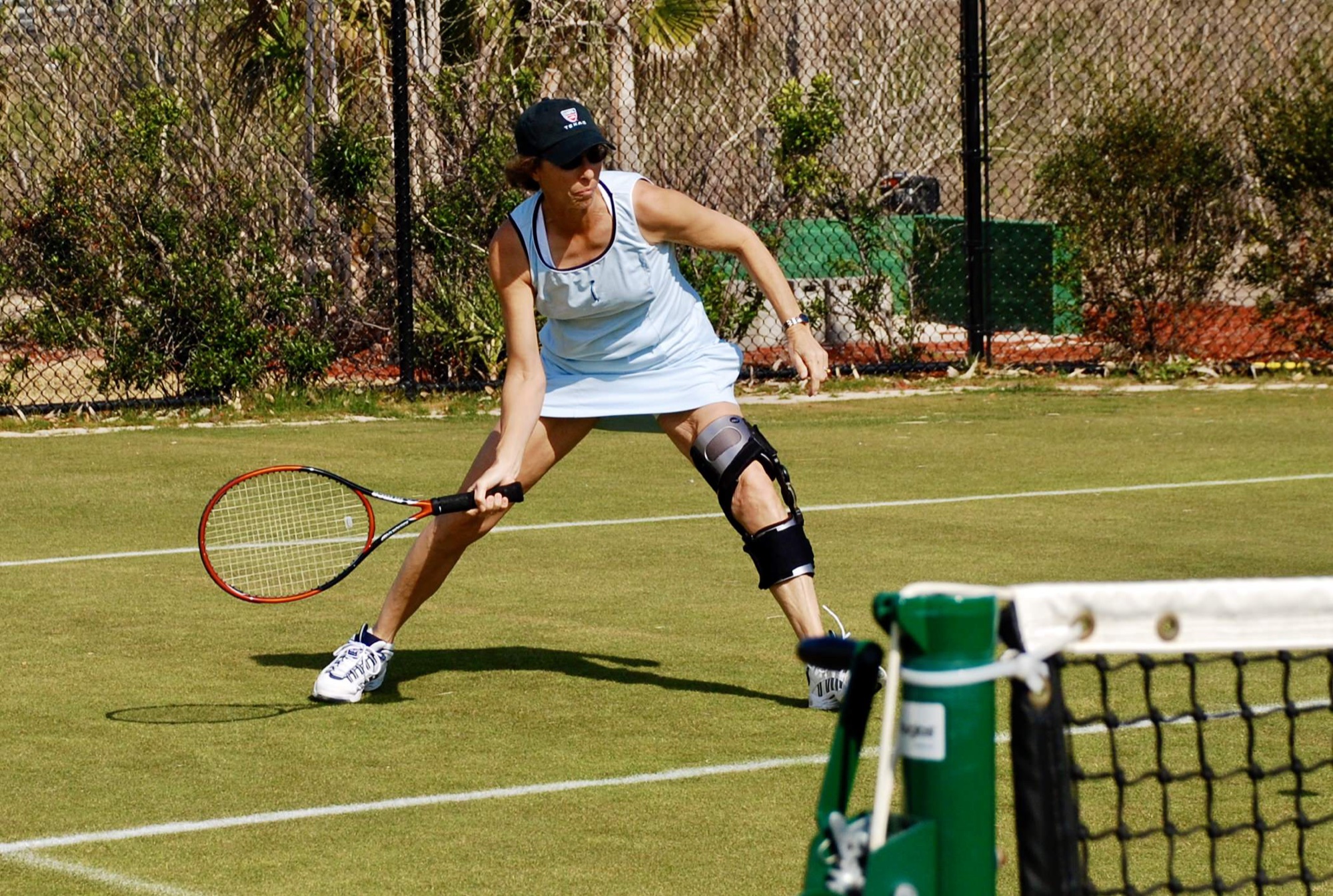
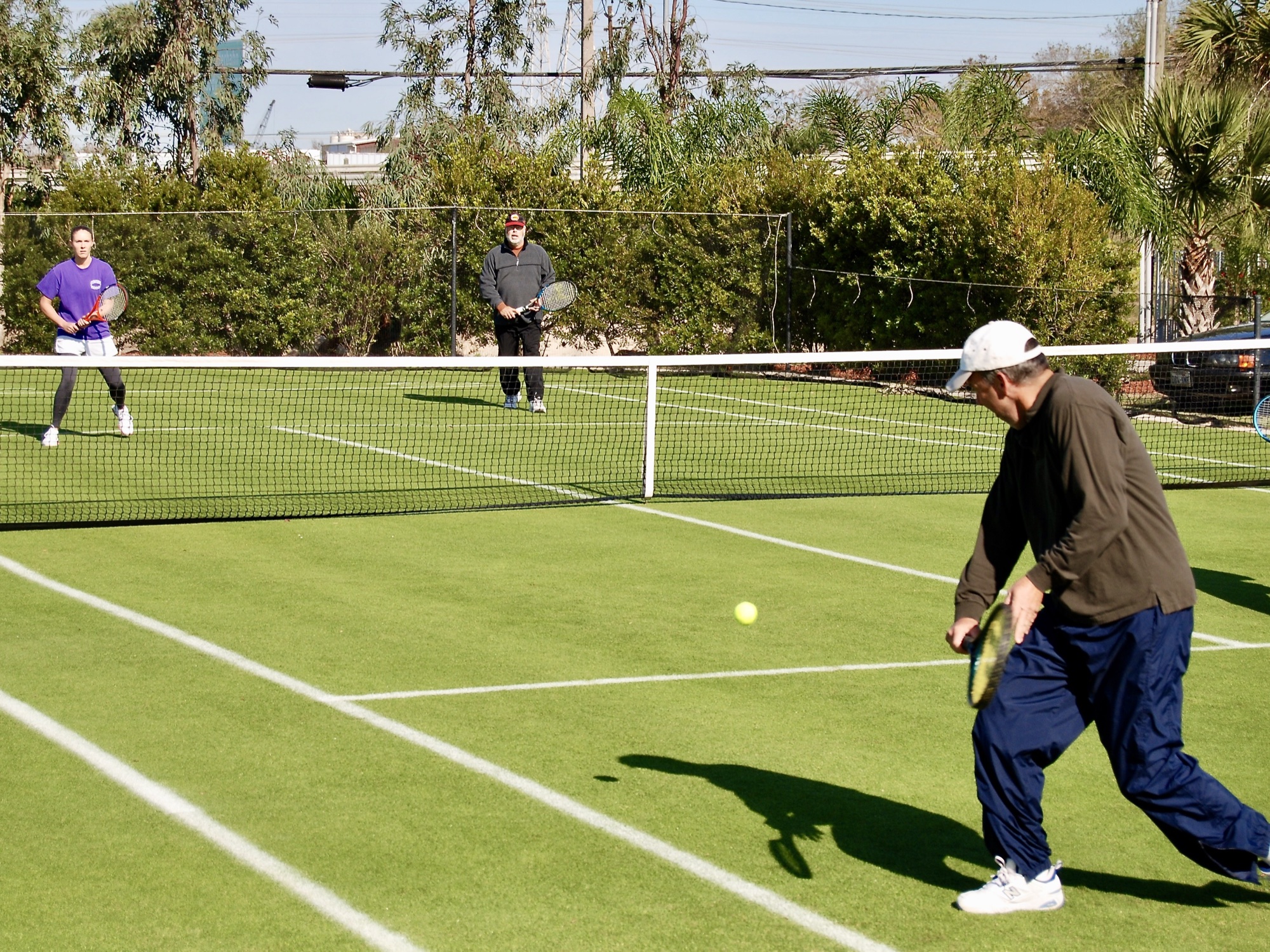
Five fun doubles points on the grass
The clinicWe had the pleasure of having legendary Owen Davidson teach a clinic on the grass. He is most known for his Grand Slam titles with Billie Jean King. We all received great tennis instruction, but even better stories.
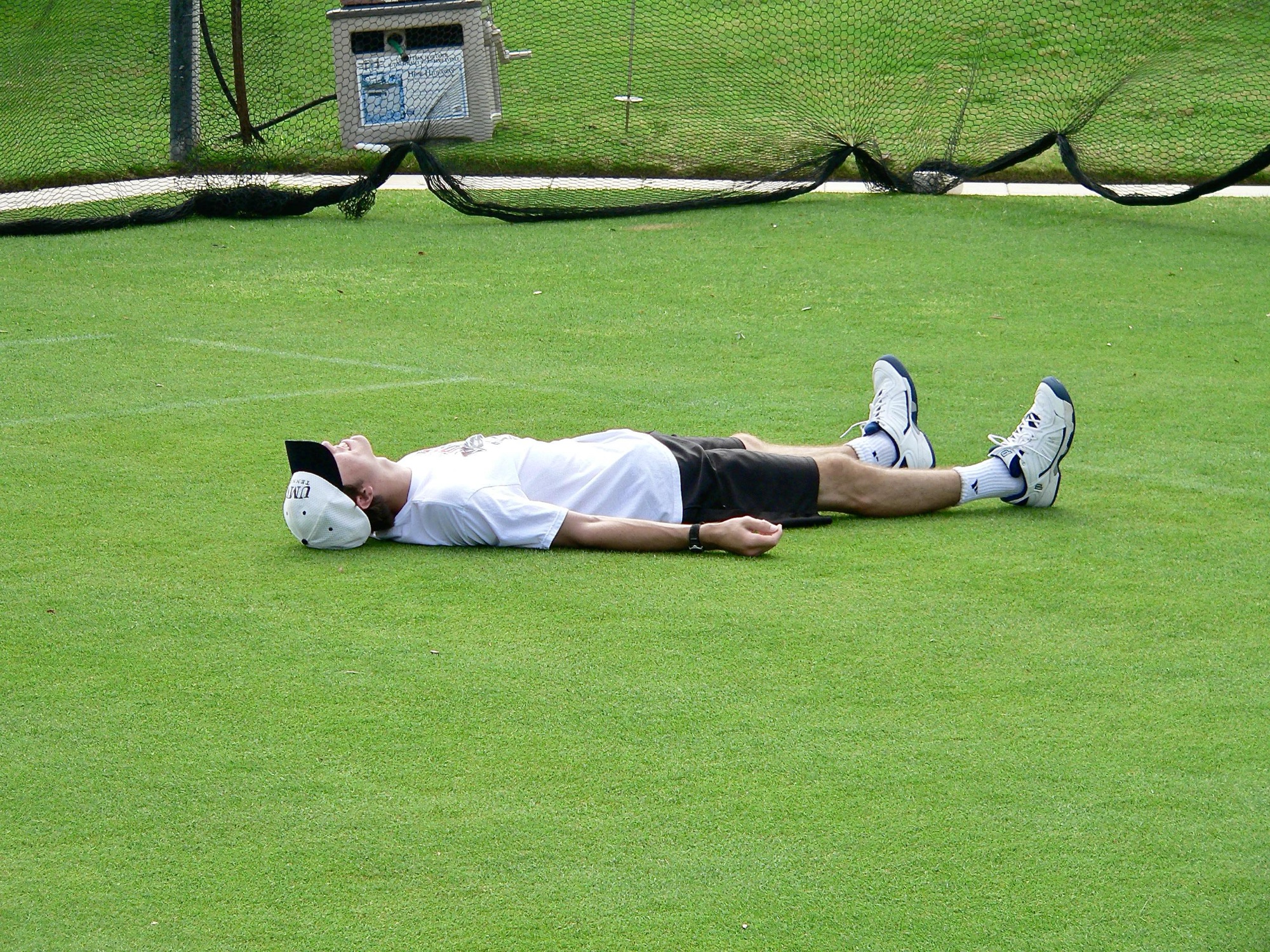
No shoes requiredYou can even play barefoot. The grass is soft enough, and on the right morning it is the only sensible way to play.
The Wimbledon Tradition
All whites · wooden racquets
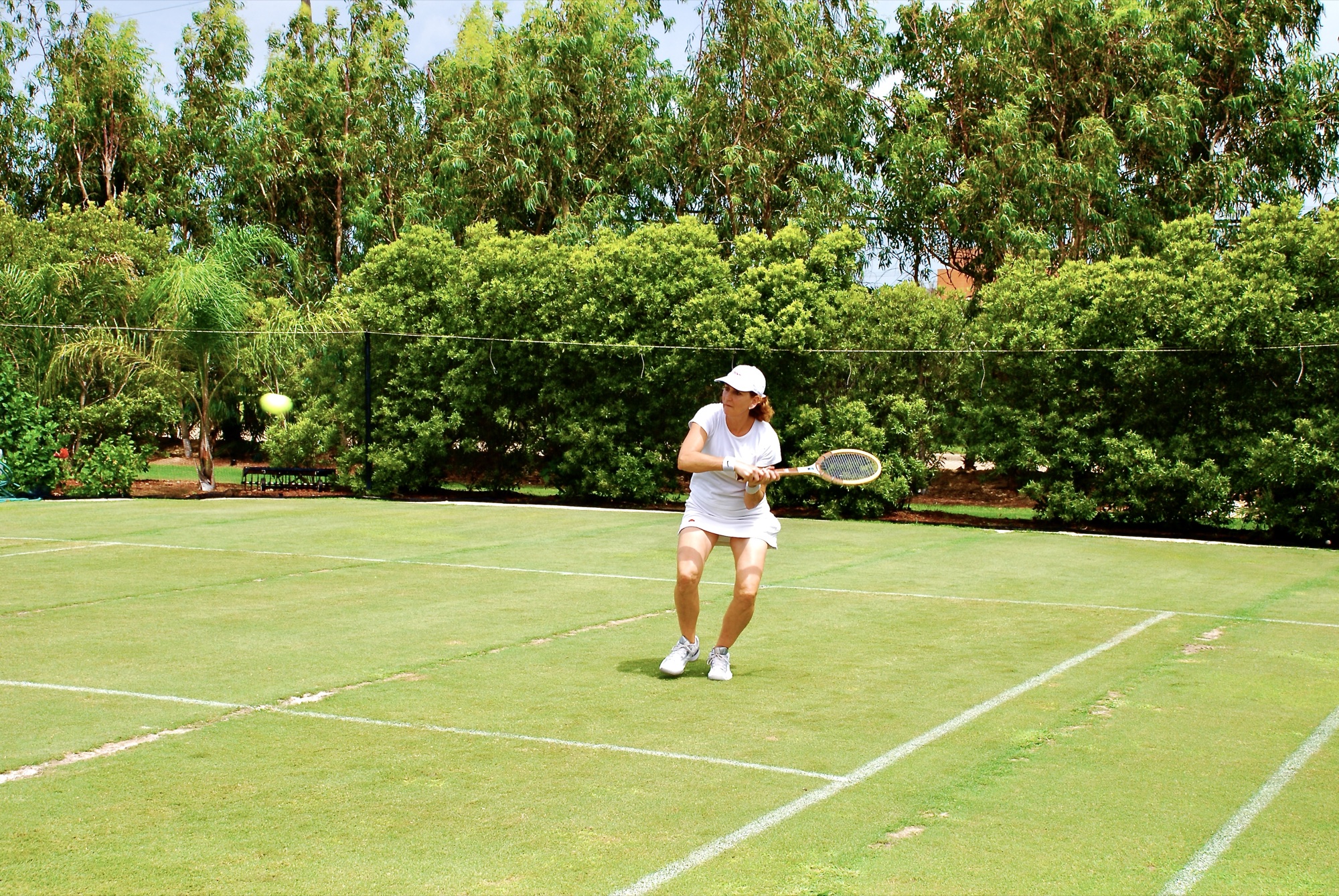
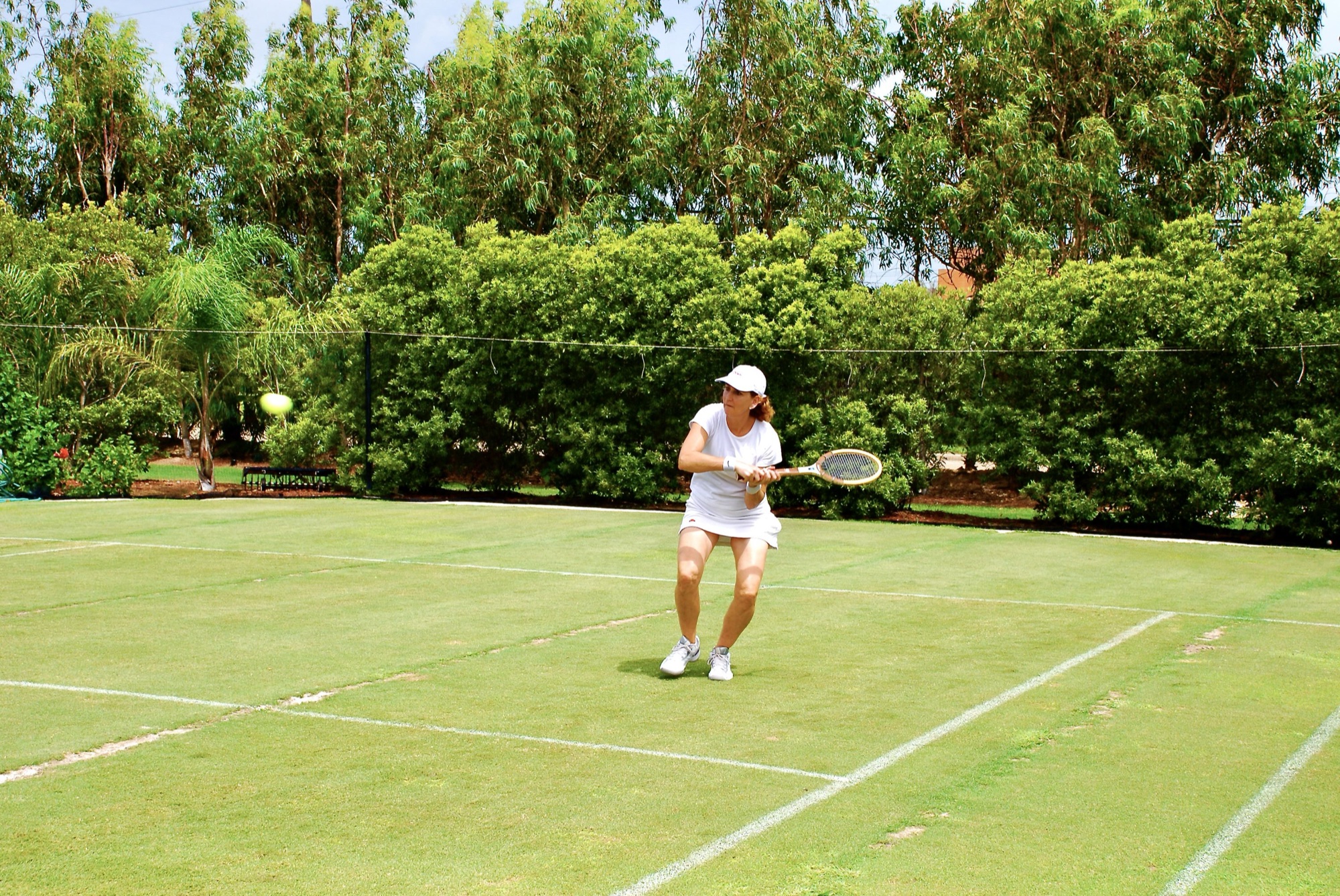
Every year during Wimbledon, we gather on the grass court in all whites, the only proper attire, and play with wooden tennis rackets. It is our small, steadfast tribute to the oldest Grand Slam, and to the way the game used to be played.
Through the Winter
Cold mornings · still Sundays
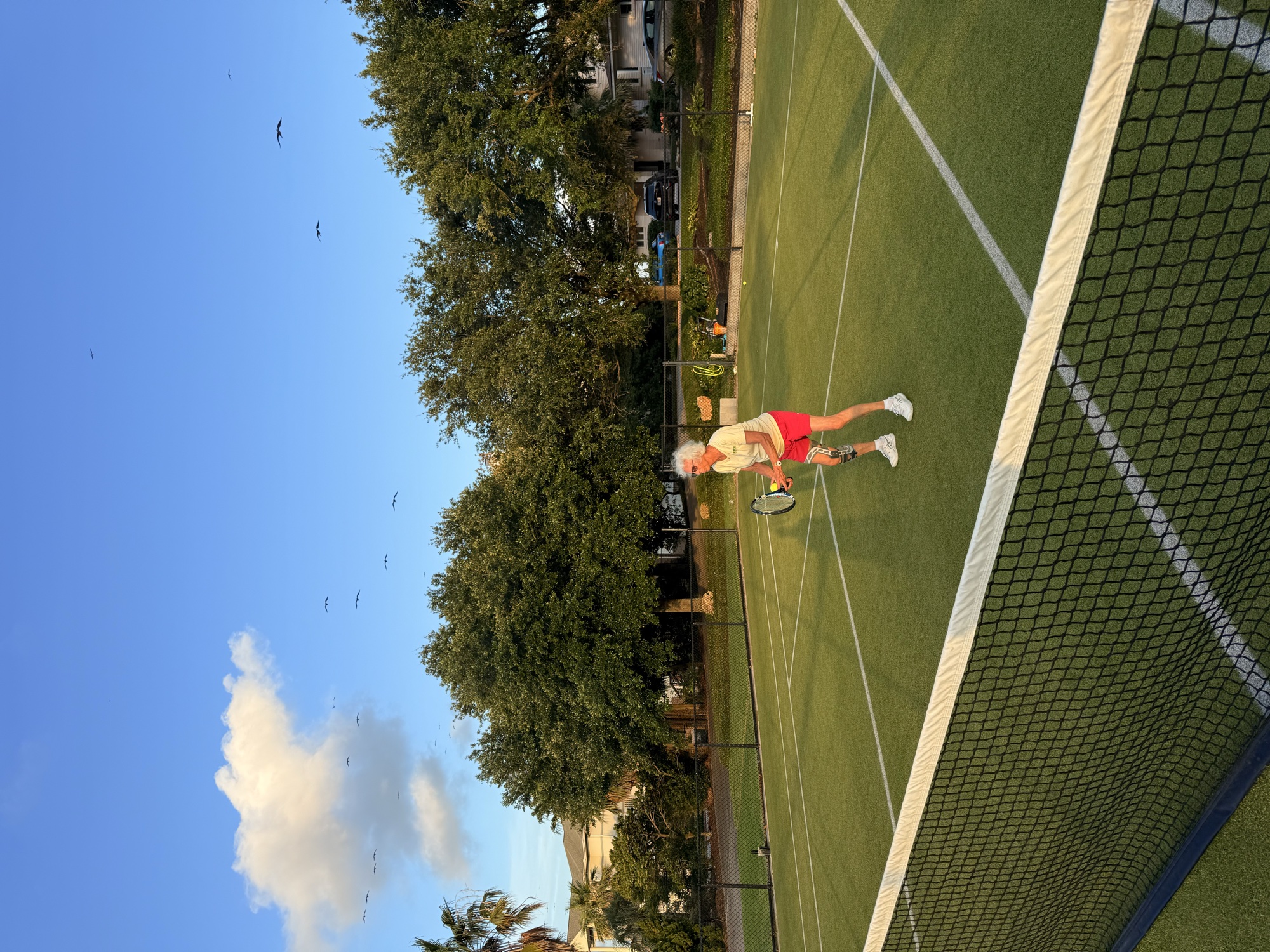
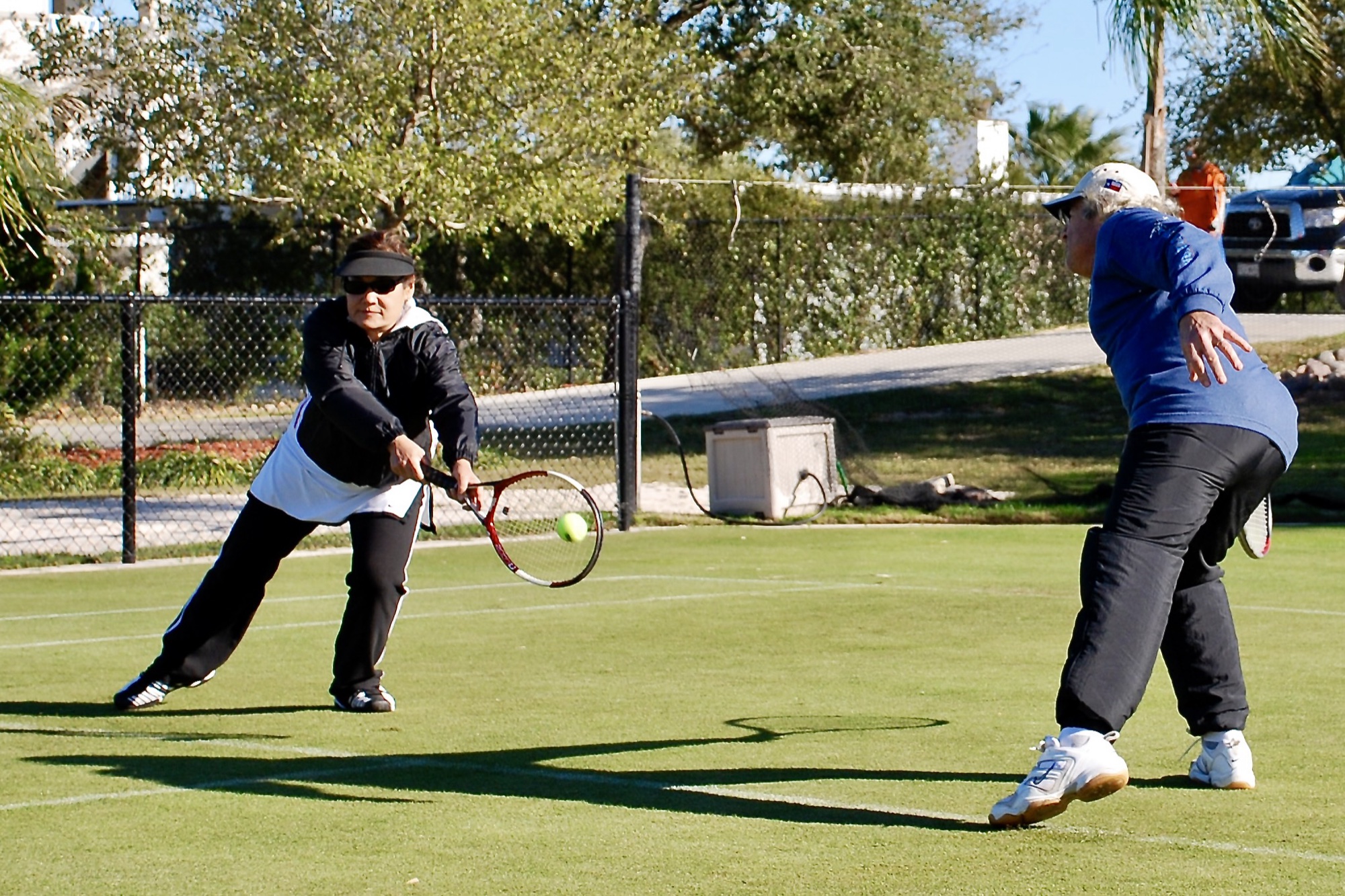
Conditions vary from day to day, we even play through the winter when it's cold.
How It Got Its Name
Hurricane Ike · September 2008
When Hurricane Ike made landfall in September 2008, we braced for the worst. There we expected a lot of destruction on the island and we assumed the court was finished. Grass and saltwater are not friends. But, when we returned to the island, we couldn't believe it. It seemed to have survived, and not just survived. The sheer weight of the water had compressed the surface, and when play resumed, the ball bounced truer and faster than it ever had.